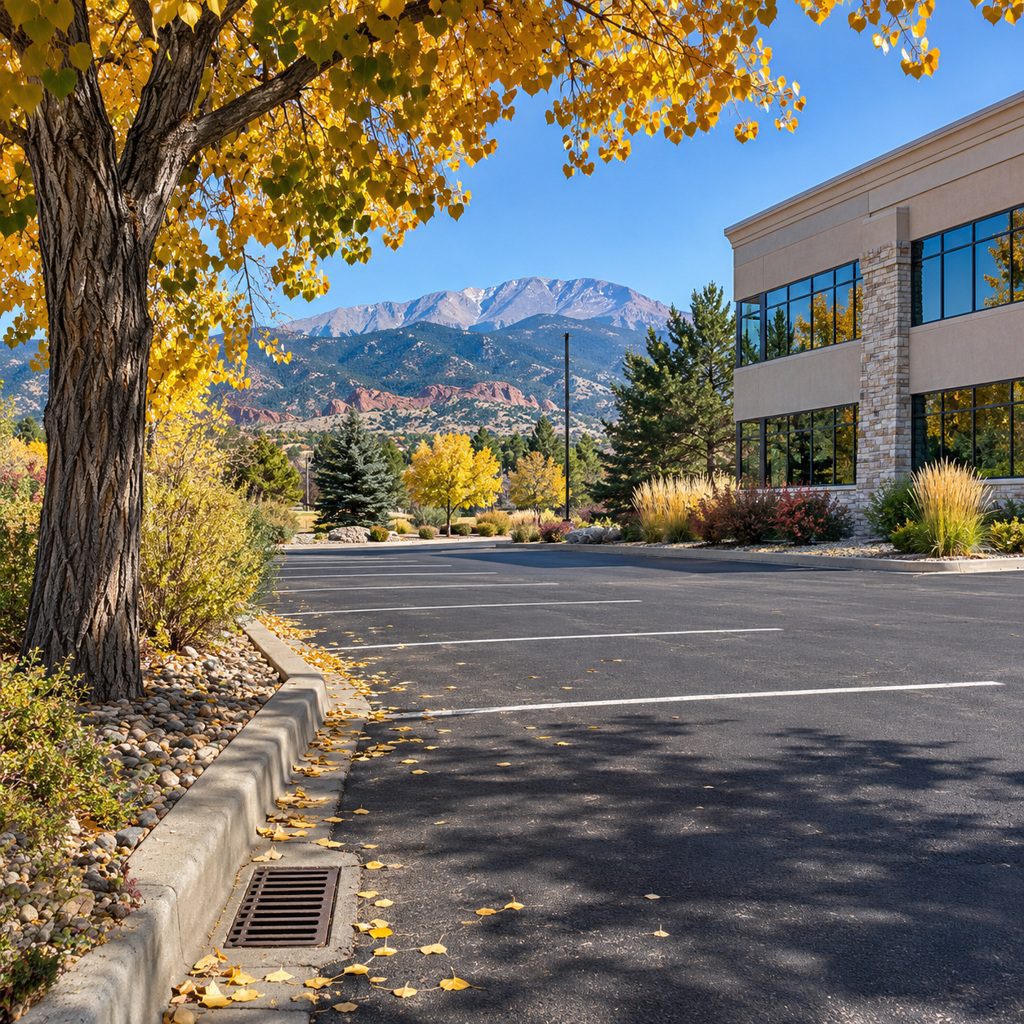
Leaf sweeping in Colorado Springs should follow where material collects on the property. A calendar reminder is a useful starting point, but it cannot show whether leaves have gathered behind a building, crossed a delivery lane, or formed a line along a downhill curb. A short inspection gives the sweeping provider a much better starting scope.
For commercial properties in Colorado Springs, Monument, Fountain, and nearby service areas, the priority is collecting accessible material before it becomes a larger cleanup problem. Leaf sweeping should connect the visible parking lot with the less obvious corners where wind, landscaping, and vehicle movement concentrate debris.
Trace the routes that leaves take
Start near the trees and walk toward the places where material stops moving. Landscaped islands, fence lines, wheel stops, and the back of a loading area can all interrupt its path. The dirtiest section may sit far from the tree that supplied the leaves.
Mark those collection points on a site photo. Explain whether the accumulation is loose, damp, mixed with trash, or accompanied by branches. Leaf sweeping equipment and collection methods should suit the actual material, not just the label on the work order. Large objects and unusual debris need to be described separately.
Avoid making a site-wide frequency decision from one sheltered corner. A heavily affected edge may justify extra attention while open central rows remain relatively clear. Ask the contractor whether a targeted visit or a broader service makes sense for the observed conditions.
Give leaf sweeping a drainage priority
Locate visible surface drains and the pavement channels leading toward them. Look for leaves at the grate and along the curb upstream. Colorado Springs explains that stormwater runoff carries pollutants directly to local waterways. Keeping loose material available for collection is a practical part of caring for the property’s exterior.
Do not push leaves into an inlet or assume rain will finish the cleanup. Leaf sweeping should collect and remove material according to the agreed scope. If standing water remains after the visible obstruction is removed, arrange further assessment instead of assuming another surface pass will solve the issue.
A sweeping visit does not establish that an underground pipe, catch basin, or other structure is functioning properly. Keep surface cleaning, drainage inspection, and repairs distinct in the maintenance record so each issue reaches the right provider.
Match the request to the type of property
An office property may need access planned around employee arrival. A shopping center may require coordination with tenant opening times and customer parking. An industrial site may have forklifts, freight movements, or controlled areas that need separate instructions.
Leaf sweeping requests should identify these operating conditions. Tell the provider about gates, clearance limits, narrow service drives, and areas where vehicles remain overnight. Include the contact who can answer questions during the visit. A clear route through the site allows a more useful conversation about what can be completed.
Consider an example office building with a tree-lined employee lot and a sheltered rear entrance. The site plan might prioritize the landscaped curb, the rear doorway approach, and the accessible drain areas. It would also note rows blocked by overnight vehicles, so the manager can arrange access before the work begins.
Coordinate with landscaping and debris removal
Ask when adjacent planting areas and sidewalks will be addressed. If leaves will be moved from those spaces onto pavement immediately after service, the work sequence needs attention. Leaf sweeping should be scheduled with enough information to avoid that preventable mismatch.
Discuss bulky branches, abandoned items, or debris mixed into the leaf accumulation before accepting a quote. EcoSweeping lists both sweeping and debris-removal services, but their availability does not mean every item belongs in an ordinary sweeping pass. Request the appropriate scope for each type of material.
The destination of collected debris matters as well. A mixed load containing litter and sediment should not automatically be described as clean compostable leaves. Confirm collection, transport, and disposal arrangements with the provider and keep those costs visible in the proposed work.
Make weather a decision point
Leaf sweeping should proceed when pavement and access conditions are suitable. A scheduled date can change if snow, ice, or other conditions make the intended operation inappropriate. Agree on who will evaluate the site and communicate a revised plan.
Do not rely on the appearance of one sunny section. Shaded pavement and the rear of a building may differ from the exposed front drive. Give the contractor current photos if conditions vary across the property. That can help clarify whether a phased visit or a later window is the better choice.
Review the result with a short checklist
After leaf sweeping, compare the completed work with the areas identified at the start:
- Check the specified curb lines and landscaped-island edges.
- Review accessible surface-drain approaches.
- Inspect the agreed entrance and loading areas.
- Record sections blocked by parked vehicles or other obstacles.
- Note any separate debris or drainage work still required.
Use photos from the same locations for each inspection. A repeatable record is especially helpful when an owner is off site or several people share management duties. It also gives the next service request a clearer basis than simply saying that the leaves are back.
Plan the next visit from observed conditions
There is no need to assume one leaf sweeping interval fits every property or every part of a property. Check how quickly the priority areas refill and whether the nearby trees still hold leaves. Adjust the plan with the provider according to that evidence.
EcoSweeping serves Colorado Springs and surrounding communities and offers parking lot sweeping for commercial properties. Share the areas that collect material fastest, the operating schedule, and any access limits when discussing service.
For leaf sweeping that follows the needs of your property, contact EcoSweeping. A site-specific conversation can connect seasonal cleanup with routine pavement maintenance and identify the work that deserves attention first.